A great party isn’t a list of activities — it’s two or three things kids will remember. Pinterest is full of clever crafts that look great in photos but die in the first five minutes of a real birthday. This list is different: 15 activities that have actually worked at children’s parties in Hong Kong, sorted by age, energy level, and budget.
Mix one centerpiece activity with one or two lighter ones. Don’t try to do them all — the kids won’t last and the schedule will collapse.
The Three Categories That Work
Real party activities fall into three buckets:
- Centerpiece — the main event. Takes 40–90 minutes, anchors the whole party.
- Filler — 10–20 minute activities that absorb energy between bigger moments.
- Open-loop — things kids can drift in and out of (colouring stations, photo booths, snacks).
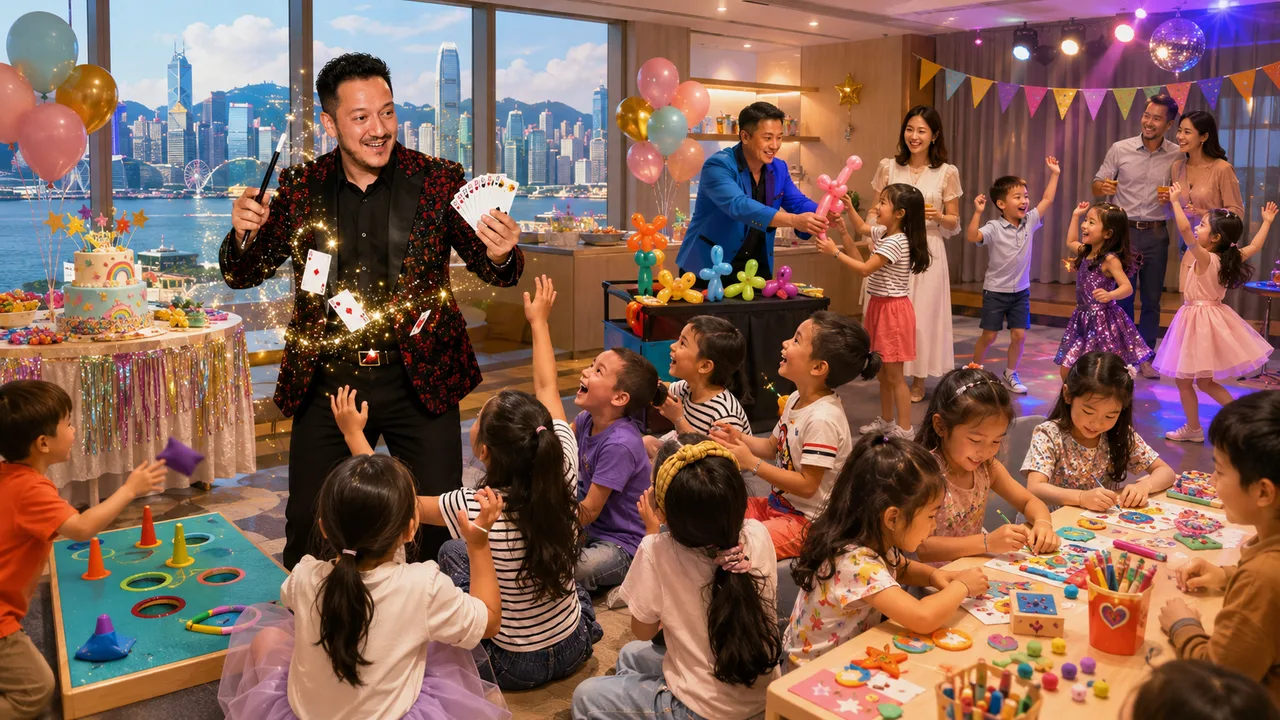
A great party picks one centerpiece, two fillers, and one open-loop. Anything more is overkill.
The Centerpiece Activities (Pick One)
1. Live Magic Show
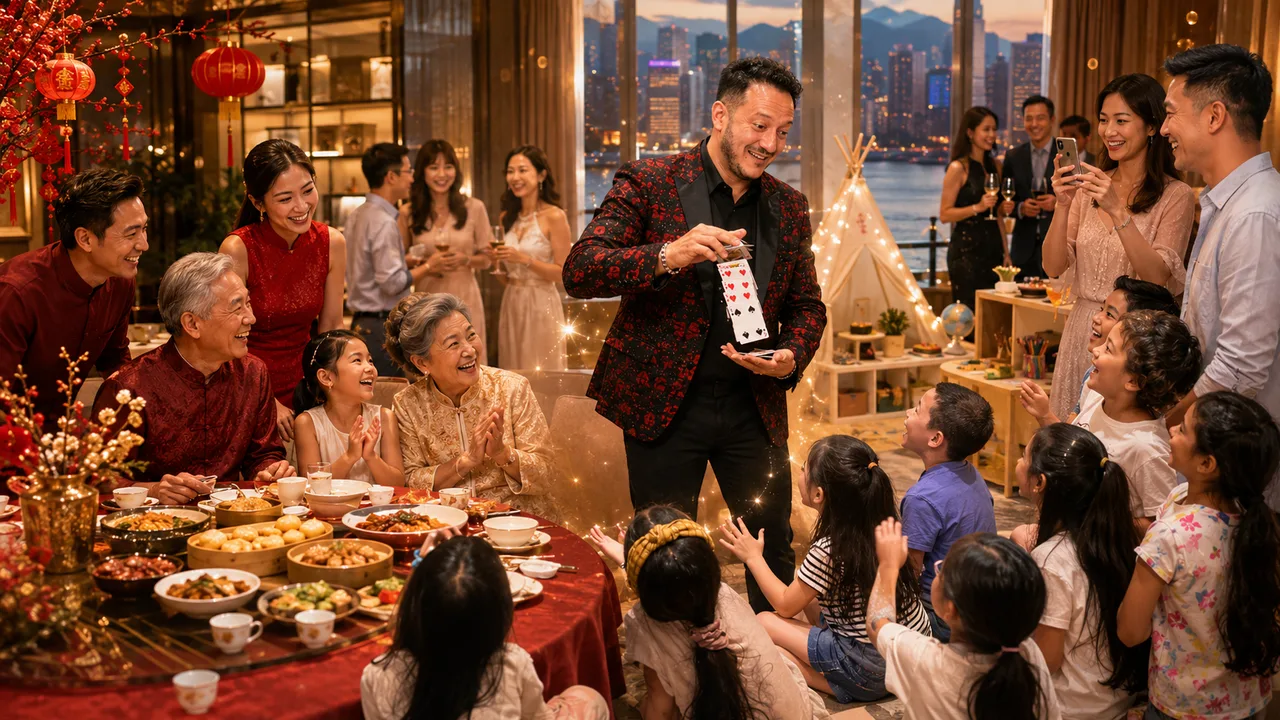
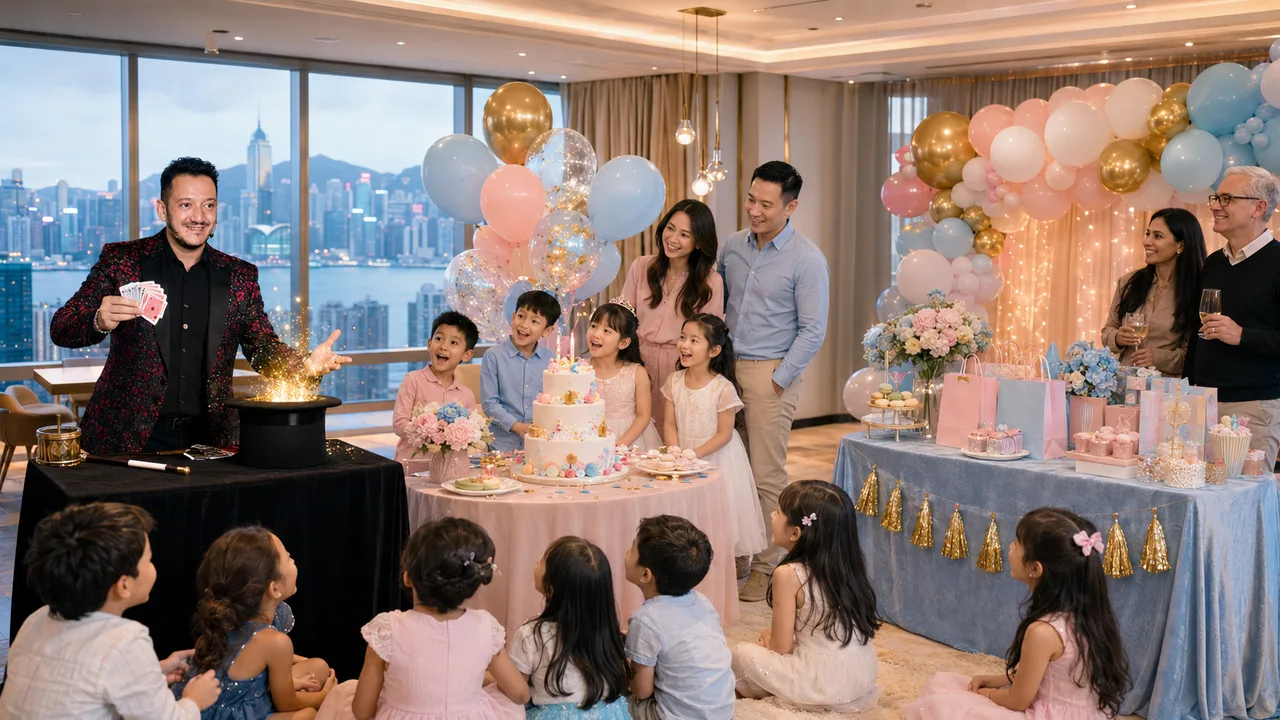
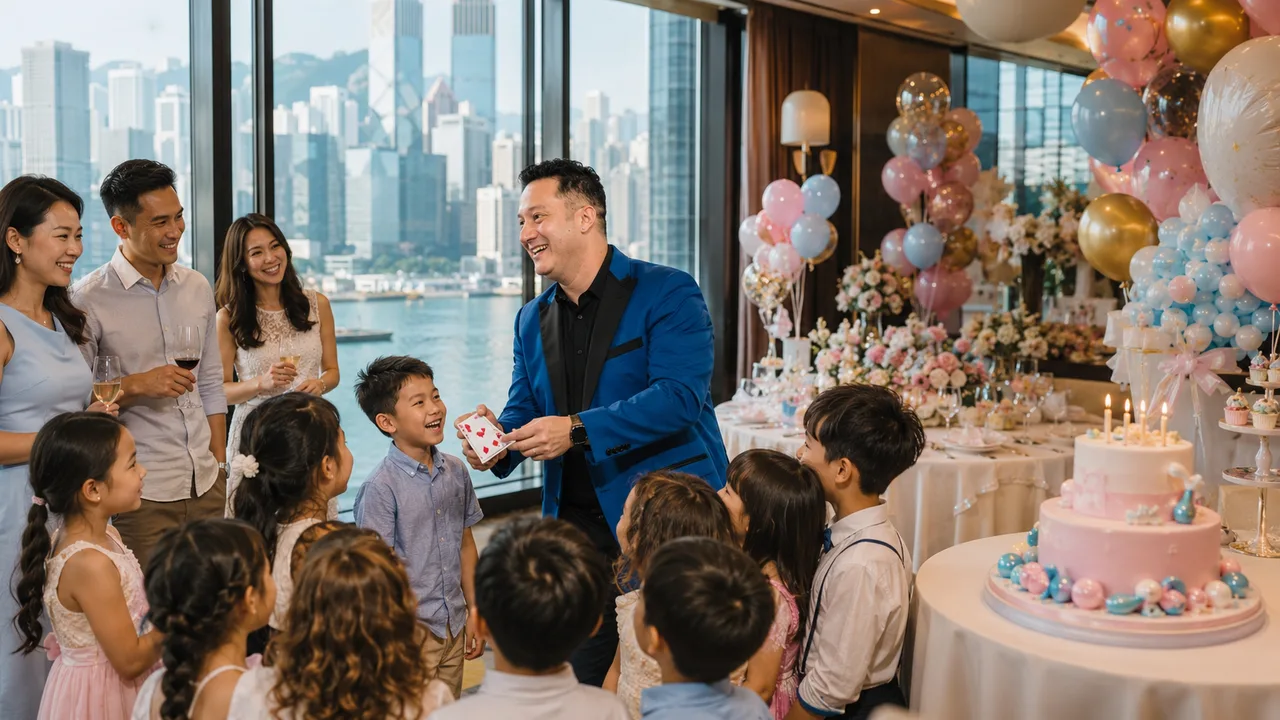
The single most reliable centerpiece for ages 4–10. A professional magic show is interactive, scales well from small living rooms to ballrooms, and gives every child a story to retell.
Why it works: kids are seated, focused, and emotionally engaged. The show has a clear beginning, middle, and end — which means your party has a clear arc.
Best for: any age 4+, any group size, any venue with reasonable seating.
2. Treasure Hunt / Scavenger Hunt
A well-designed treasure hunt turns the venue into a game. Print clues, hide objects, give kids a checklist.
Why it works: every child is active and contributing. Older kids (7+) love the puzzle aspect.
Best for: ages 6–10, groups of 8–20, venues with enough space to hide things (homes, clubhouses, parks).
Watch out for: can fall apart with very young kids who don’t read fluently. Keep clues picture-based for under-6s.
3. Bouncy Castle / Soft Play
A classic for younger kids. Burns physical energy and is essentially self-running.
Why it works: kids don’t need instructions. They just go.
Best for: ages 3–7, outdoor venues or large indoor spaces with clearance.
Watch out for: novelty wears off after 30–40 minutes, which is fine if it’s not your whole party. Pair with a more focused activity.
4. Cooking or Decorating Workshop
Cupcake decorating, pizza-making, fruit-skewer building. Kids make something edible.
Why it works: dual win — entertainment AND food.
Best for: ages 5–10, groups of 8–15, venues with tables.
Watch out for: messy, and slower than parents expect (plan 45–60 minutes minimum).
5. Bowling, Trampoline, Sports Center
Activity-based outings where the venue runs the show.
Why it works: zero planning load — book it, show up, hand over the kids.
Best for: ages 7+, groups of 10–20.
Watch out for: typically higher per-child cost (HKD 250–500), and the “activity is the party” — no room for cake-cutting drama or other moments.
The Filler Activities (Pick Two)
6. Musical Statues / Musical Chairs
Old, simple, still works. Five minutes of energy burn between bigger moments.
Best for: ages 4–8, any space, free.
7. Parachute Games
A colourful play parachute (HKD 200–500 to buy) keeps a group of 10–15 kids busy for 15 minutes with zero prep beyond “lift up, sit down.”
Best for: ages 3–7, group play, indoor or outdoor.
8. Pin the Tail (Themed)
Pin the wand on the magician, pin the candle on the cake, pin the hat on the bunny. Easy to theme.
Best for: ages 4–7, low-key 5–10 minute filler.
9. Balloon Pop with Surprises
Inflate balloons, slip a small toy or note inside each, kids pop them.
Best for: ages 4–8, loud venues (the popping is the point).
Watch out for: noise level, and some young kids fear popping sounds — give them a “balloon-keeper” role instead.
10. Quick Craft Station
Stickers, masks, paper crowns. Set up at a table; kids drift in and out.
Best for: ages 3–6, calm-down windows, mixed-age parties where younger siblings need something to do.
The Open-Loop Activities (Pick One)
11. Photo Booth Corner
A backdrop and a box of props. Kids style themselves and pose. Some of the best party photos come from here.
Cost: HKD 200–800 for a backdrop and prop set, reusable.
Best for: ages 5+, any party.
12. Colouring / Activity Sheets at Tables
Print themed sheets, set out crayons. Doubles as a welcome activity at the door.
Best for: ages 3–8.
13. Balloon Twisting Station
Pair this with a magic show that includes balloon twisting (most premium and deluxe packages do) and you’ve extended the “magic” through the whole party.
Best for: ages 4–10, smaller groups where the magician can keep up.
14. Sand Art / Slime Bar
Mess-tolerant venues only. Kids fill bottles with coloured sand or mix slime ingredients.
Best for: ages 6–10.
Watch out for: floors. Cleanup is real.
15. Movie Wind-Down Corner
For longer parties (2.5+ hours), a quiet corner with a movie playing gives tired kids a soft landing.
Best for: ages 5+, late-stage party cool-down.
Activity Combinations That Work
A few proven combinations for different party shapes:
Small home party, age 4–6, 90 min: 1 magic show (centerpiece) + 1 musical statues (filler) + 1 colouring station (open-loop)
Clubhouse party, age 6–8, 2 hours: 1 magic show (centerpiece) + 1 treasure hunt (filler) + 1 photo booth (open-loop)
Larger party, age 8–10, 2.5 hours: 1 magic show (premium, centerpiece) + 1 cupcake decorating (filler) + 1 photo booth (open-loop)
Outdoor party / BBQ: 1 scavenger hunt (centerpiece) + 1 balloon pop (filler) + 1 sports games (open-loop)
Activities to Skip
A few popular ideas that look great on paper and rarely deliver:
- Long card or board games — kids’ attention drops fast in group settings
- Complicated DIY crafts with too many steps — half the kids will need adult help and the activity stalls
- Karaoke for under-8s — usually two confident kids dominate while the rest disengage
- Strict competition with elimination — early-out kids spend the rest of the party sulking
- Two centerpiece-level activities back to back — kids run out of focus
Hong Kong Realities That Shape Activity Choices
A few things that look fine on a Pinterest board and don’t survive contact with a Hong Kong afternoon:
- Summer humidity kills outdoor energy — June through September, anything physical outdoors after 11 AM melts kids in 20 minutes. Move active games indoors or into the early morning, or pivot to a seated centerpiece like a magic show.
- Apartments are small — treasure hunts and scavenger hunts assume a venue with hiding places. A 600-square-foot flat doesn’t have them. Either move to a clubhouse or pick activities designed for tight spaces (close-up magic, parachute games, photo booth).
- Clubhouse noise rules — most residential clubhouses enforce sound limits. Bouncy castles with built-in music, loud games, and amplified entertainment can get the party shut down. Confirm decibel limits before booking the room.
- Sudden rain — Hong Kong’s weather flips fast. Any outdoor plan needs an indoor backup in the same building or within 5 minutes’ walk.
- Transport for guests — kids and their parents arrive by MTR, taxi, or building-to-building. Far-flung venues lose 30% of the RSVP list when the day comes. Stay near a station or pick venues most guests already know.
How to Run Activities Smoothly
A few field-tested rules:
- Demo, don’t explain. Show what to do for 30 seconds; don’t lecture for 5 minutes.
- Set a clear start and end. “We’re playing for 10 minutes” beats “we’ll play until people get bored.”
- One adult on safety, one on activity. Kids will trip, drop things, get over-excited. Have backup.
- Music as a transition signal. Music up = play. Music down = gather.
- Have a backup activity ready. If your treasure hunt falls flat, pivot to musical statues without breaking the flow.
For the full schedule that ties activities together, see our hour-by-hour party timeline.
Common Questions Parents Ask
How many activities do I really need?
Three to four total. One centerpiece, two fillers, and one open-loop is plenty for a 2-hour party.
What if the kids hate my activity?
It happens. Have a backup — usually musical statues or a quick “everyone gather” moment to reset. The party doesn’t have to follow the plan to be a success.
Can I just hire a magician and skip the rest?
Yes, often. A 60-minute magic show plus arrival snacks and cake-cutting fills a 2-hour party comfortably. Many parents do exactly this.
What activities work for mixed-age parties (siblings)?
Magic shows handle wide age ranges best. For other activities, give older kids a small “helper” role (running the photo booth, leading musical statues) — they feel important and aren’t bored.
Do I need to plan for shy kids?
Yes. Include activities that don’t require performance — colouring, photo booths, watching the magic show from the back. Never force participation.
A great party isn’t more activities. It’s a small number of well-paced, age-appropriate moments anchored by one centerpiece your child will remember.
Make the magic show your centerpiece or get in touch to plan it around your activities.